

Dunedin | Otago | Southland General Practice
What is a Gastric Bypass?
Gastric Bypass (GB) is a combined restrictive and malabsorptive bariatric procedure.
The operation involves:
- Creating a small gastric pouch (30–50 mL)
- Dividing the small intestine
- Connecting the pouch to a small bowel limb
- Bypassing much of the stomach, duodenum, and proximal jejunum
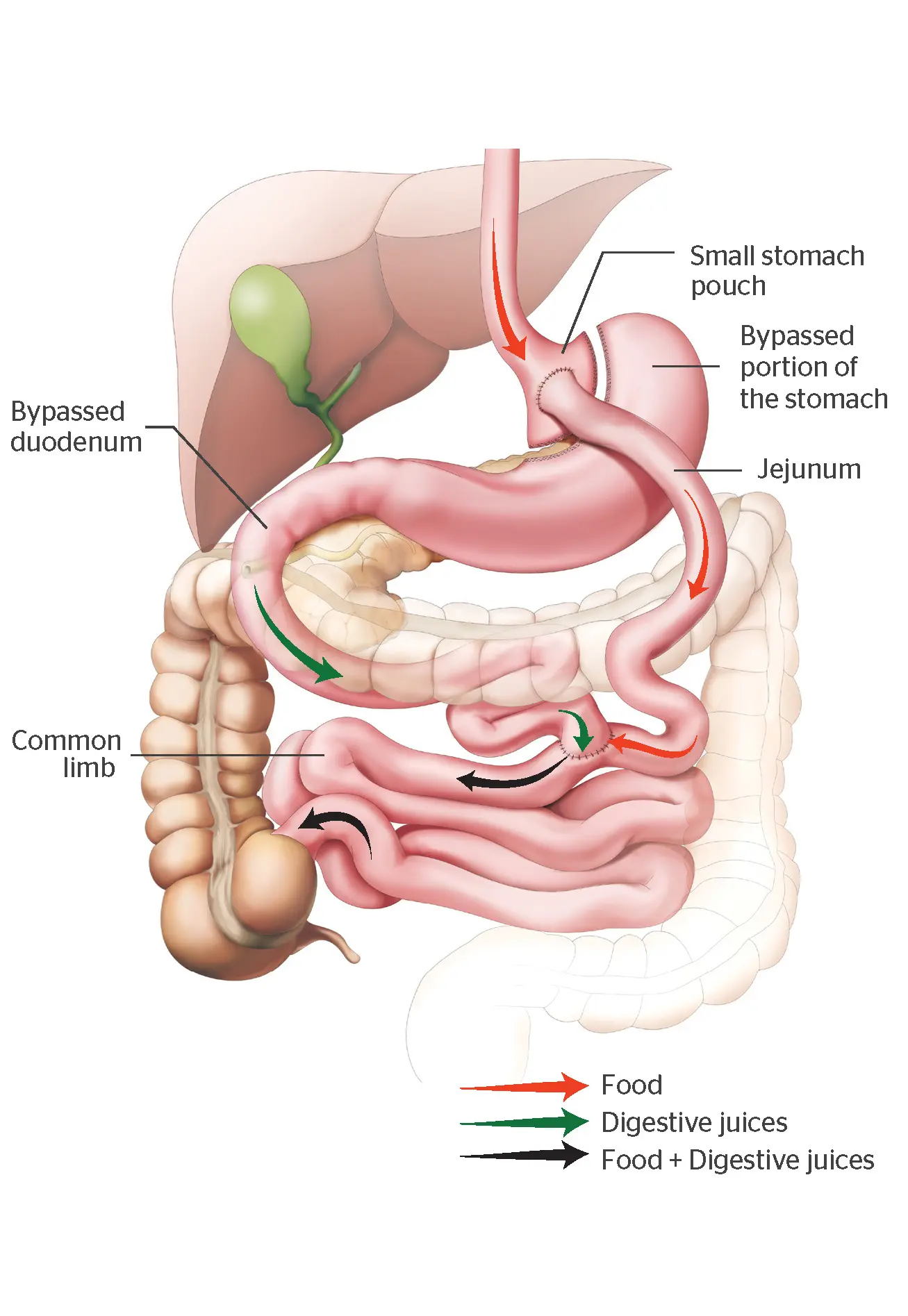
Mechanism of action
- Restriction of intake
- Altered gut hormones (GLP-1 rise)
- Reduced ghrelin signalling
- Mild–moderate macronutrient malabsorption
- Significant improvement in insulin sensitivity
Compared with sleeve gastrectomy, a bypass produces greater metabolic effect, particularly for type 2 diabetes and severe reflux disease.
For GPs in Dunedin and across Otago, structured long-term follow-up is essential due to the malabsorptive component.
Expected weight loss after Gastric Bypass
How much weight should patients lose after gastric bypass?
Weight loss is measured as % Total Body Weight Loss (TBWL).
| Time post-op | Expected TBWL | Clinical interpretation |
|---|---|---|
| 1 month | 10–15% | Rapid early phase |
| 4 months | 22–30% | Strong metabolic response |
| 8 months | 30–38% | Ongoing loss |
| 12 months | 32–40% | Plateau common |
Most patients achieve 65–75% excess weight loss at 12 months.
Concerning patterns
- <15% TBWL at 6 months
- Ongoing vomiting
- Rapid unexplained weight loss
- Failure of diabetes improvement
Early and late complications after Gastric Bypass
Early (<30 days)
- Anastomotic leak
- Intra-abdominal collection
- Bleeding
- Pulmonary embolism
Late complications
- Internal hernia
- Marginal ulcer
- Small bowel obstruction
- Iron deficiency anaemia
- Vitamin B12 deficiency
- Calcium deficiency
- Hypoglycaemia (late dumping)
- Protein malnutrition
Internal hernia risk is unique to bypass and must be considered in any patient with intermittent abdominal pain.
Red flag symptoms after Gastric Bypass
Urgent same-day referral required if:
- Persistent tachycardia >100 bpm
- Severe abdominal pain (especially colicky/intermittent)
- Fever
- Persistent vomiting
- Haematemesis or melaena
- Severe dysphagia
- Chest pain or dyspnoea
- Unexplained hypoglycaemia
- Signs of dehydration
Intermittent severe abdominal pain in a post-bypass patient should raise suspicion for internal hernia, even if CT imaging is initially normal.
If unstable in Otago → refer to Dunedin Hospital ED.
When to refer to the public hospital
Immediate referral if:
- Suspected leak
- Suspected internal hernia
- Small bowel obstruction
- GI bleeding
- Severe symptomatic anaemia (Hb <90 g/L)
- Neurological symptoms of deficiency
- Intractable marginal ulcer
- Severe malnutrition
Internal hernia is a surgical emergency.
Recommended supplementation after Gastric Bypass (NZ)
Are lifelong vitamins mandatory after bypass?
Yes: absolutely.
Due to bypass of the duodenum and proximal jejunum, micronutrient deficiency risk is higher than sleeve.
Core regimen
- Bariatric multivitamin (daily, high potency)
- Vitamin B12 (oral high dose or IM 3-monthly)
- Calcium citrate 1200–1500 mg/day
- Vitamin D 2000–3000 IU daily (adjust to levels)
- Iron supplementation (routine in menstruating women)
- Consider additional thiamine if vomiting risk
NZ Bariatric supplement providers
Calcium citrate is preferred over carbonate due to improved absorption post-surgery.
Post-Bypass blood test monitoring schedule
What blood tests should GPs order after gastric bypass?
| Time Point | Tests to Request | Clinical Purpose |
|---|---|---|
| 1 month | FBC, U&E, LFT, Iron studies, B12, Folate, Vitamin D | Early anaemia, hydration, baseline nutrition |
| 4 months | FBC, Iron studies, B12, Folate, Vitamin D, HbA1c, Lipids, LFT | Monitor metabolic improvement and emerging deficiencies |
| 8 months | FBC, Iron studies, B12, Folate, Vitamin D, Calcium, PTH, Albumin | Detect iron depletion, calcium imbalance |
| 12 months | FBC, Iron studies, B12, Folate, Vitamin D, Calcium, PTH, HbA1c, Lipids, Zinc, Copper, Thiamine | Comprehensive annual nutritional review |
| After 2 years (Annually) | FBC, Iron studies, B12, Folate, Vitamin D, Calcium, PTH, HbA1c, Lipids, Zinc | Lifelong surveillance |
Increase frequency if:
- Pregnancy
- Vegetarian diet
- Recurrent vomiting
- Ongoing PPI use
- Symptoms of neuropathy
Dumping syndrome and hypoglycaemia
Bypass patients may experience:
Early dumping (10–30 mins post-meal):
Tachycardia, flushing, diarrhoea.
Late dumping (1–3 hours):
Reactive hypoglycaemia.
Management:
- Small frequent meals
- Protein first
- Avoid refined carbohydrates
- Dietitian referral
Medication review
- Avoid NSAIDs (marginal ulcer risk)
- Reduce insulin early post-op
- Review antihypertensives
- Avoid extended-release medications
Key GP summary for Dunedin and Otago
- Expect 32–40% TBWL at 12 months
- Lifelong micronutrient supplementation mandatory
- Structured blood monitoring at 1, 4, 8, 12 months, then annually
- Intermittent abdominal pain = consider internal hernia
- Tachycardia + pain = emergency referral
- Annual lifelong nutritional surveillance essential
This page is authored by Mark Grant, FRACS, Consultant Upper GI and Bariatric Surgeon, Dunedin. Southern Weight Loss provides specialist obesity care across Otago and Southland with integrated medical and surgical pathways.